
Choosing the right destination for business expansion is no longer only about low costs. It is about long-term stability, scalability, and strategic positioning. When evaluating Southeast Asia, Indonesia continues to stand out, and Subang Industrial Park emerges as a strong representation of how the country is preparing itself for global investment. From infrastructure readiness to market size and policy direction, Indonesia offers a compelling value proposition for investors seeking to establish factories, industrial facilities, or regional operations.
As an investor looking beyond traditional markets, Indonesia provides a rare combination of growth potential and structural transformation. The rise of integrated industrial zones such as Subang Smartpolitan reflects a clear national vision: creating globally competitive environments that support manufacturing, logistics, and innovation at scale.
Indonesia’s Economic Scale and Market Potential
Indonesia is the largest economy in Southeast Asia and one of the fastest-growing consumer markets globally. With a population of more than 270 million, the country offers immediate access to a massive domestic market. This scale allows industrial investors to diversify revenue streams by serving both export markets and local demand.
From your perspective, this dual-market opportunity reduces dependency on external trade cycles. Manufacturing facilities established in Indonesia are not limited to export orientation; they can also cater to a growing middle class whose consumption patterns continue to expand. This internal demand creates a stable baseline for production, even during periods of global uncertainty.
Indonesia’s economic performance over the past decade has demonstrated resilience. Consistent growth, controlled inflation, and a stable banking sector contribute to an environment where long-term industrial investment becomes increasingly attractive.
Strategic Demographics and Labor Advantages
One of Indonesia’s strongest competitive advantages lies in its demographics. A young and productive workforce ensures labor availability well into the future. Unlike aging economies that face rising labor costs and shrinking workforces, Indonesia offers scalability without excessive wage pressure.
For you as an investor, this translates into operational flexibility. Labor-intensive manufacturing, advanced assembly, and even technology-driven production can all be supported by a workforce that is adaptable and increasingly skilled. Government-backed vocational training and industry partnerships further enhance workforce readiness, particularly in key industrial provinces such as West Java.
Subang benefits directly from this demographic advantage. Its location allows access to regional labor pools without the congestion and cost challenges associated with established metropolitan industrial zones.
Infrastructure Development as a Competitive Edge
Infrastructure plays a decisive role in determining investment viability. Indonesia has made infrastructure development a national priority, investing heavily in toll roads, ports, airports, and rail networks. These improvements significantly reduce logistics costs and improve supply chain reliability.
For industrial investors, efficient logistics mean faster turnaround times, predictable delivery schedules, and reduced operational risk. West Java, where Subang Industrial Park is located, has become one of the most connected regions in the country.
The proximity to Patimban Port enhances export efficiency, particularly for automotive, electronics, and heavy manufacturing sectors. This strategic connectivity positions Subang as a logistics-friendly industrial destination with direct access to international shipping routes.
Regulatory Reform and Investor-Friendly Policies
Indonesia’s government has undertaken major regulatory reforms to improve the investment climate. Licensing processes have been streamlined, bureaucratic overlap reduced, and foreign ownership rules clarified across multiple sectors.
From your standpoint, regulatory certainty lowers entry barriers and shortens project timelines. Clearer frameworks allow investors to focus on execution rather than administrative complexity. Incentives such as tax allowances, tax holidays, and customs facilities further improve project feasibility, especially within designated industrial zones.
Subang Industrial Park aligns closely with these reforms by offering a ready-to-operate environment. Utilities, zoning compliance, and infrastructure are integrated into a single ecosystem, minimizing startup friction for foreign companies.
West Java as Indonesia’s Industrial Heartland
West Java has long been recognized as Indonesia’s industrial backbone. Its proximity to Jakarta provides access to financial institutions, government agencies, and supplier networks, while newer industrial areas offer more competitive land prices and expansion potential.
Subang occupies a strategic position within this landscape. It serves as a bridge between urban economic centers and maritime export gateways. This balance allows industrial operations to remain connected without suffering from congestion-related inefficiencies.
For investors planning long-term operations, this geographic advantage enhances scalability. Expansion phases can be implemented more efficiently compared to saturated industrial regions.
Indonesia in the Global Manufacturing Realignment
Global supply chains are undergoing significant restructuring. Companies are diversifying production bases to mitigate geopolitical and operational risks. Indonesia is increasingly benefiting from this shift as a reliable alternative manufacturing hub.
You gain access to abundant natural resources, competitive production costs, and improving technological infrastructure. Industries such as automotive, electronics, food processing, chemicals, and renewable energy are actively encouraged through policy support and infrastructure planning.
Subang Industrial Park is designed to accommodate this diversification. Its master-planned approach allows multiple industries to coexist while maintaining efficiency, safety, and environmental standards.
Sustainability and Smart Industrial Ecosystems
Sustainability is no longer optional in global investment decisions. Environmental, social, and governance considerations now influence access to capital, partnerships, and long-term valuation.
Indonesia has responded by promoting integrated and environmentally responsible industrial development. Planned industrial estates reduce environmental risk through centralized waste management, optimized land use, and efficient energy systems.
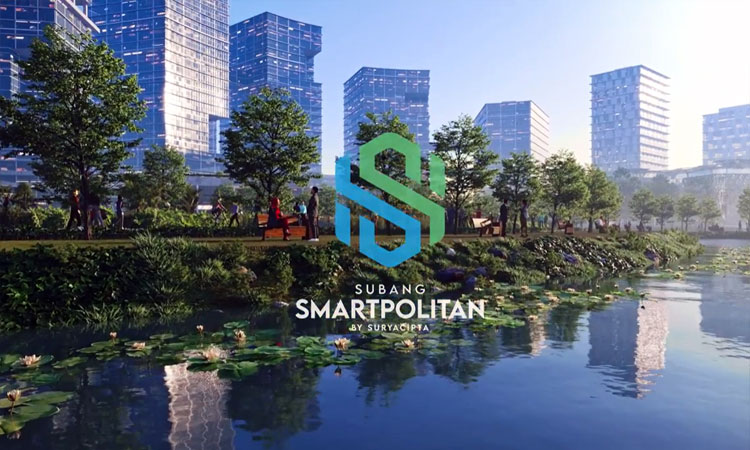
Subang Smartpolitan adopts this smart industrial ecosystem concept by integrating digital infrastructure, green spaces, and sustainable utilities. For you, this means investing in an environment designed to remain compliant with evolving global ESG standards.
Beyond Manufacturing: Long-Term Growth Opportunities
Indonesia’s attractiveness extends beyond factory floors. Rapid urbanization, digital transformation, and infrastructure expansion create opportunities in logistics, data centers, research facilities, and supporting services.
Establishing operations within Subang Industrial Park enables participation in this broader economic ecosystem. Industrial investments can be complemented by commercial activities and innovation-driven initiatives that enhance long-term returns.
This integrated approach strengthens resilience and positions investments to adapt as market dynamics evolve.
Why Subang Industrial Park Appeals to Global Investors
When selecting an industrial location, clarity and future-readiness are critical. Subang Industrial Park offers a combination of factors that align with global investment priorities:
- Strategic access to ports and transportation networks
- Competitive land availability with expansion potential
- Skilled and scalable workforce supply
- Alignment with government investment policies
- Integrated infrastructure supporting modern industry
These elements collectively reduce risk while enhancing long-term growth prospects.
Conclusion
Indonesia has moved beyond the perception of an emerging market with untapped potential. It is now a destination delivering tangible opportunities supported by policy commitment, infrastructure readiness, and demographic strength.
For you as a global investor, entering Indonesia means gaining access to scale, stability, and strategic positioning within Southeast Asia. Choosing Subang Industrial Park further refines that decision by placing operations in a purpose-built environment aligned with international business expectations.
By investing in Subang Industrial Park, the focus shifts from short-term gains to long-term value creation—anchored in one of Asia’s most promising and dynamic markets.