The rapid advancement of artificial intelligence has transformed how work is performed, evaluated, and optimized across industries. Automation, machine learning, and intelligent systems now handle tasks that were once considered uniquely human, from data analysis to content generation. As technical capabilities expand, the nature of professional value is shifting away from routine execution toward skills that cannot be easily replicated by machines.
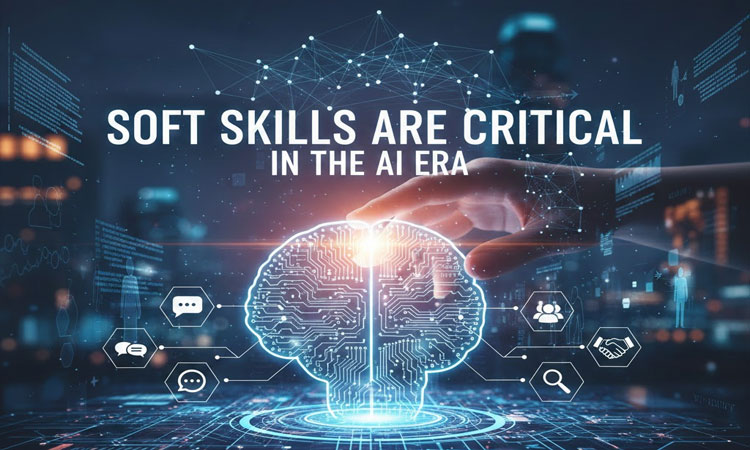
In this context, soft skills have become increasingly critical in the AI era. While technology excels at efficiency and pattern recognition, it lacks emotional understanding, ethical judgment, and contextual awareness. Careers that remain relevant and resilient are those grounded in human-centered competencies such as communication, empathy, adaptability, and critical thinking. Understanding why soft skills matter more than ever is essential for sustainable career growth in an AI-driven economy.
Understanding Soft Skills in the AI Era
Soft skills refer to interpersonal, cognitive, and emotional abilities that shape how individuals interact, think, and respond to complex situations. Unlike technical skills, they are transferable across roles and industries.
The Difference Between Technical Skills and Soft Skills
Technical skills focus on specific tools, systems, or processes. They can often be learned through structured training and are increasingly augmented or automated by AI.
Soft skills, by contrast, involve judgment, emotional intelligence, and social interaction. These skills determine how effectively technical capabilities are applied in real-world contexts, making them essential complements to AI-driven work.
Why AI Amplifies the Importance of Soft Skills
As AI automates routine tasks, human contribution shifts toward areas requiring interpretation, collaboration, and ethical responsibility. Soft skills enable professionals to guide AI output, resolve ambiguity, and align technology with human values.
Rather than diminishing the role of humans, AI elevates the importance of uniquely human competencies.
Communication Skills in an AI-Driven Workplace
Clear and effective communication is foundational in environments where humans and intelligent systems collaborate. Related topic: Find Internet Marketing
Translating Complex Information
AI systems generate insights that may be technically accurate but difficult to interpret. Professionals must translate complex outputs into clear recommendations for stakeholders.
Strong communication skills ensure that AI-driven insights lead to informed decisions rather than confusion or misapplication.
Facilitating Collaboration Across Teams
AI adoption often involves cross-functional teams, including technical specialists, business leaders, and end users. Communication bridges these groups by aligning understanding and expectations.
Professionals who communicate effectively enhance collaboration and reduce friction in AI-enabled workplaces.
Emotional Intelligence as a Career Differentiator
Emotional intelligence is one of the most automation-resistant skill sets in the AI era.
Empathy and Human Connection
AI lacks the capacity for empathy, compassion, and emotional awareness. Careers involving leadership, customer interaction, healthcare, and education rely heavily on these qualities.
Empathy supports trust, engagement, and long-term relationships, reinforcing the relevance of human professionals even as automation expands.
Managing Change and Uncertainty
AI-driven transformation introduces uncertainty and disruption. Emotional intelligence enables professionals to manage stress, support colleagues, and maintain morale.
Organizations value individuals who stabilize teams and foster resilience during periods of rapid change.
Critical Thinking and Judgment in AI-Augmented Work
AI provides recommendations, but humans remain responsible for decisions.
Evaluating AI Outputs
Critical thinking enables professionals to question assumptions, assess data quality, and identify potential bias in AI-generated results.
Blind reliance on automation increases risk. Human judgment ensures that AI insights are applied appropriately and ethically.
Navigating Ambiguity and Complexity
Many professional challenges involve incomplete information and competing priorities. Soft skills support reasoning in ambiguous situations where AI lacks contextual understanding.
Careers that emphasize judgment and synthesis remain resilient in the AI era.
Adaptability and Learning Agility
The AI era is defined by rapid change, making adaptability a core career skill. Recommended: On The Cusp Of A Future In The Dental Field
Responding to Technological Evolution
Tools, platforms, and processes evolve continuously. Professionals must adapt quickly to new systems and expectations.
Learning agility enables individuals to update skills and integrate AI into workflows without losing effectiveness.
Embracing Continuous Improvement
Soft skills support openness to feedback and willingness to learn. This mindset is essential for long-term relevance as roles evolve.
Adaptable professionals remain valuable even as specific technical skills become outdated.
Collaboration and Teamwork in AI-Enabled Organizations
AI does not eliminate teamwork; it reshapes how collaboration occurs.
Human–AI Collaboration
Effective collaboration involves understanding AI capabilities and limitations. Soft skills enable professionals to integrate machine output with human insight.
This collaboration enhances productivity and decision quality when guided by communication and trust.
Building Inclusive and Diverse Teams
AI-driven work often spans cultures and geographies. Soft skills support inclusive collaboration and respect for diverse perspectives.
Diverse teams supported by strong interpersonal skills produce more balanced and innovative outcomes.
Leadership Skills in the Age of Artificial Intelligence
Leadership remains inherently human despite technological advancement.
Vision and Ethical Direction
AI can optimize processes but cannot define purpose or values. Leaders provide vision and ethical guidance, ensuring technology serves human goals.
Soft skills enable leaders to balance efficiency with responsibility.
Influence Without Authority
Modern leadership often involves influence rather than hierarchy. Communication, empathy, and persuasion support alignment in distributed and AI-enabled teams.
Leadership effectiveness increasingly depends on interpersonal competence.
Creativity and Innovation Beyond Automation
Creativity extends beyond pattern generation and requires human context.
Original Thinking and Problem Framing
AI generates outputs based on existing data, while humans define problems and imagine novel possibilities.
Soft skills support curiosity, imagination, and conceptual thinking that drive innovation.
Cultural and Contextual Awareness
Creative decisions depend on cultural nuance and emotional resonance. These elements cannot be fully automated.
Careers in strategy, design, and communication benefit strongly from human creativity.
Ethical Responsibility and Trust
AI introduces ethical challenges that require human oversight.
Addressing Bias and Fairness
AI systems may reflect bias present in data. Ethical judgment and accountability are human responsibilities.
Soft skills support ethical awareness and responsible decision-making.
Building Organizational and Public Trust
Trust depends on transparency, integrity, and communication. Professionals who demonstrate these qualities enhance organizational credibility.
Soft skills therefore contribute directly to long-term sustainability.
Soft Skills and Career Resilience
Career resilience depends on the ability to adapt and connect.
Transferability Across Roles and Industries
Soft skills remain valuable regardless of technological change. Communication, empathy, and problem-solving apply across contexts.
This transferability supports mobility and long-term employability.
Complementing Technical Expertise
Technical skills may change, but soft skills amplify their impact. Professionals who combine both gain strategic advantage.
Career growth increasingly favors balanced skill profiles.
Developing Soft Skills Intentionally
Soft skills can be strengthened through deliberate practice and reflection.
Learning Through Experience and Feedback
Real-world interaction, collaboration, and feedback support soft skill development.
Continuous reflection enhances self-awareness and effectiveness.
Integrating Soft Skills into Professional Development
Organizations increasingly incorporate soft skills into training and evaluation. Professionals who prioritize these skills align with future expectations.
Intentional development supports sustained relevance.
Conclusion
Soft skills are critical in the AI era because they represent the dimensions of work that technology cannot replicate. As artificial intelligence automates routine tasks and enhances analytical capability, the value of human contribution shifts toward communication, empathy, judgment, adaptability, and ethical responsibility. These skills ensure that AI is applied thoughtfully and effectively within complex social and organizational environments.
Long-term career success in an AI-driven economy depends on integrating soft skills with technical expertise. Professionals who cultivate human-centered competencies remain relevant, resilient, and influential as technology evolves. In the age of intelligent machines, soft skills are not secondary attributes, but foundational assets that define sustainable careers and meaningful work.