
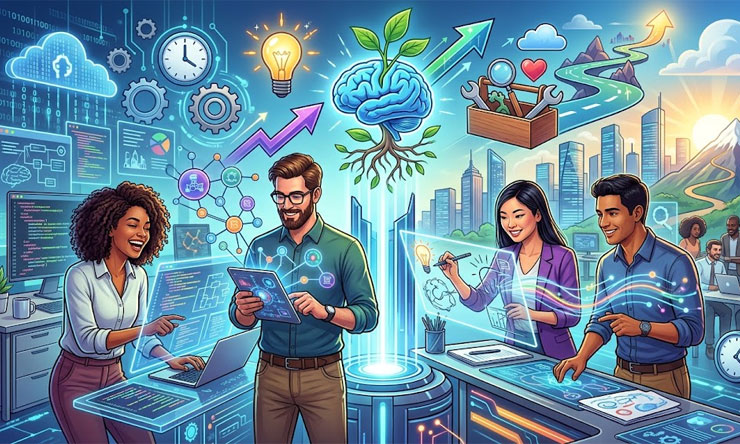
The digital age has transformed the way people work, communicate, learn, and grow. Technology evolves rapidly, industries shift overnight, and new opportunities emerge faster than ever before. In this environment, technical expertise alone is no longer enough to guarantee long-term success. Individuals and organizations must continuously adapt, learn, and innovate to remain relevant in a highly competitive world. This is where a growth mindset becomes one of the most valuable qualities anyone can develop.
A growth mindset refers to the belief that abilities, intelligence, and skills can be improved through learning, effort, and persistence. Unlike a fixed mindset, which assumes talent and intelligence are static, a growth mindset encourages experimentation, resilience, and continuous self-improvement. In the digital era, where change is constant, developing the right growth mindset skills can help individuals thrive professionally and personally. Whether someone is a student, entrepreneur, employee, or leader, these skills are essential for navigating modern challenges and achieving sustainable success.
Why Growth Mindset Matters More in the Digital Era
The digital revolution has reshaped every aspect of society. Artificial intelligence, automation, remote work, social media, and digital platforms continue to redefine how people interact and conduct daily activities. As industries evolve, many traditional jobs are disappearing while new career opportunities emerge. This rapid transformation requires people to remain adaptable and willing to learn continuously.
A growth mindset helps individuals embrace change instead of fearing it. People with this mindset understand that failure is not the end of the journey but part of the learning process. They are more willing to explore new technologies, improve their abilities, and adapt to changing circumstances. In contrast, those with a fixed mindset may resist innovation because they fear making mistakes or appearing incompetent.
One major reason growth mindset skills are important today is the increasing demand for lifelong learning. Digital tools and platforms make information accessible to almost everyone. Online courses, webinars, podcasts, and virtual communities allow individuals to expand their knowledge anytime and anywhere. However, taking advantage of these opportunities requires curiosity, discipline, and openness to learning.
Another important factor is workplace transformation. Companies now prioritize employees who can solve problems creatively, collaborate effectively, and adapt quickly to change. Technical skills may become outdated within a few years, but mindset-driven skills remain valuable across industries. Employers increasingly seek individuals who can evolve with technology rather than rely solely on existing expertise.
The digital age also creates more competition. People can now compete globally through remote work and online platforms. To stand out in this environment, individuals must continuously improve themselves. A growth mindset encourages persistence, innovation, and confidence in facing new challenges.
Furthermore, mental resilience has become increasingly important. Constant exposure to social media, information overload, and changing trends can create pressure and uncertainty. Individuals with a growth mindset are often better equipped to manage stress because they see obstacles as opportunities to learn rather than threats to their self-worth.
Essential Growth Mindset Skills Needed Today
Developing a growth mindset involves building several interconnected skills that support personal and professional development. These abilities help individuals remain flexible, motivated, and productive in an ever-changing digital landscape.
Adaptability is one of the most important skills in the modern world. Technology changes rapidly, and people who can adapt quickly are more likely to succeed. Adaptability means being open to new ideas, adjusting strategies when necessary, and remaining comfortable in unfamiliar situations. Individuals who embrace adaptability are more likely to experiment with new tools and discover innovative solutions.
Critical thinking is another essential skill. The internet provides unlimited access to information, but not all information is accurate or reliable. Critical thinking allows individuals to evaluate sources carefully, analyze situations objectively, and make informed decisions. In the digital age, where misinformation spreads quickly, this skill is crucial for both personal and professional success.
Communication skills are equally important. Digital communication dominates modern life through emails, video calls, social media, and messaging apps. Effective communication helps individuals collaborate efficiently, express ideas clearly, and build meaningful relationships. Strong communicators are better able to lead teams, negotiate challenges, and inspire others.
Emotional intelligence also plays a major role in growth mindset development. Emotional intelligence involves understanding and managing emotions while empathizing with others. In remote and digital workplaces, emotional intelligence helps maintain healthy collaboration and strong interpersonal connections. People with high emotional intelligence often respond more calmly to setbacks and are more willing to learn from feedback.
Creativity and innovation have become increasingly valuable in the digital economy. Automation can replace repetitive tasks, but human creativity remains difficult to replicate. A growth mindset encourages experimentation and original thinking. Creative individuals are more likely to identify new opportunities, improve existing systems, and contribute fresh ideas to projects and organizations.
Time management and self-discipline are also essential skills. The digital world is full of distractions, from social media notifications to endless streams of content. Without discipline, productivity can decline significantly. Individuals with strong self-management skills can prioritize tasks effectively, stay focused on goals, and maintain consistent progress despite distractions.
Collaboration skills have gained importance as remote work and global teamwork become more common. Working effectively with people from different cultures, backgrounds, and locations requires openness, patience, and adaptability. A growth mindset helps individuals value teamwork and remain receptive to different perspectives.
Problem-solving skills are another key component of growth mindset success. Modern challenges often require innovative and flexible solutions. People who approach problems with curiosity rather than fear are more likely to discover effective strategies and maintain confidence during difficult situations.
Digital literacy is now considered a fundamental skill. Understanding digital tools, online platforms, cybersecurity basics, and emerging technologies can improve efficiency and career opportunities. However, digital literacy is not just about technical knowledge. It also involves the willingness to learn new systems continuously as technology evolves.
Resilience remains one of the most powerful growth mindset skills. Setbacks and failures are inevitable in both personal and professional life. Resilient individuals recover more quickly from disappointment and continue moving forward despite obstacles. In the fast-paced digital world, resilience helps people maintain motivation and long-term focus.
How to Develop a Strong Growth Mindset in Daily Life
Building a growth mindset is an ongoing process that requires consistent effort and self-awareness. Fortunately, anyone can strengthen these skills through intentional habits and practical strategies.
One effective method is embracing challenges instead of avoiding them. Many people hesitate to try new things because they fear failure or criticism. However, challenges often provide the greatest opportunities for growth. By stepping outside comfort zones, individuals can develop confidence, discover hidden strengths, and gain valuable experience.
Learning from mistakes is another important practice. Failure should not be viewed as proof of inadequacy but as feedback for improvement. Successful people often experience multiple setbacks before achieving their goals. Reflecting on mistakes objectively helps individuals identify lessons and improve future performance.
Seeking constructive feedback can also accelerate growth. Feedback provides valuable insights into strengths and areas for improvement. Instead of becoming defensive, individuals with a growth mindset use feedback as a tool for development. This approach encourages continuous learning and stronger performance over time.
Setting realistic and measurable goals is equally important. Clear goals provide direction and motivation while helping individuals track progress. Breaking large objectives into smaller achievable steps can make growth feel more manageable and rewarding.
Continuous learning should become part of daily life. Reading books, taking online courses, attending workshops, and exploring new topics can help individuals stay updated and intellectually engaged. The digital age offers countless learning opportunities, making personal development more accessible than ever before.
Practicing self-reflection is another valuable habit. Taking time to evaluate experiences, emotions, and decisions can improve self-awareness and personal growth. Journaling, meditation, or simply reviewing daily progress can help individuals identify patterns and maintain focus on long-term improvement.
Surrounding oneself with positive and growth-oriented people also influences mindset development. Supportive communities encourage learning, accountability, and motivation. Being around people who value improvement and resilience can inspire individuals to pursue their own growth more actively.
Maintaining curiosity is essential in a rapidly changing world. Curious individuals are more likely to explore new ideas, ask questions, and seek innovative solutions. Curiosity fuels creativity and helps people remain engaged with lifelong learning.
Another important strategy is managing digital consumption wisely. While technology offers many benefits, excessive screen time and constant comparison on social media can negatively affect mental health and productivity. Developing healthy digital habits allows individuals to use technology intentionally rather than becoming overwhelmed by it.
In the modern business environment, organizations also benefit from encouraging growth mindset cultures. Companies that support continuous learning, innovation, and collaboration often achieve higher employee engagement and long-term success. Leaders who model adaptability and resilience inspire teams to embrace change more confidently.
Patience is another critical aspect of growth mindset development. Meaningful growth rarely happens overnight. Building skills, improving habits, and achieving goals require consistent effort over time. Individuals who remain patient and persistent are more likely to experience lasting improvement.
Conclusion
The digital age presents both incredible opportunities and significant challenges. Rapid technological advancements continue to reshape industries, careers, and everyday life. In this environment, success depends not only on technical expertise but also on the ability to adapt, learn, and grow continuously. A growth mindset provides the foundation for navigating uncertainty and thriving in a constantly evolving world.
Skills such as adaptability, critical thinking, communication, emotional intelligence, creativity, resilience, and digital literacy have become essential for long-term success. These abilities help individuals remain competitive, productive, and mentally strong despite rapid changes and increasing global competition.
Developing a growth mindset requires intentional effort, lifelong learning, and a willingness to embrace challenges. By viewing failures as opportunities, seeking feedback, practicing self-discipline, and remaining curious, individuals can unlock their full potential in the digital era.
Ultimately, the future belongs to those who are willing to evolve. People who cultivate growth mindset skills are better prepared to handle uncertainty, pursue innovation, and create meaningful success in both personal and professional life. As technology continues to transform society, the ability to learn and adapt may become the most valuable skill of all.