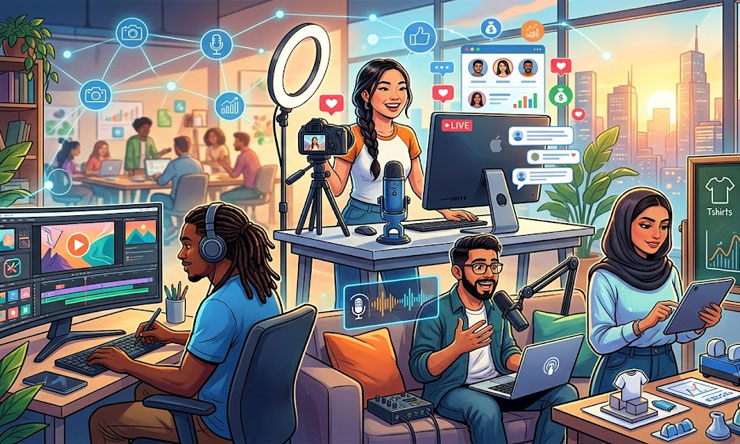
The creator economy has transformed the way people build careers, earn income, and connect with audiences worldwide. What once started as a niche opportunity for bloggers, YouTubers, and social media influencers has evolved into a global economic movement that supports millions of professionals across countless industries. Today, creators are no longer limited to producing entertainment. They educate, inspire, market products, build communities, and launch businesses that generate significant economic value.
As digital platforms continue to expand and technology becomes more accessible, career opportunities within the creator economy are growing faster than ever. Individuals no longer need traditional employers to establish successful careers. Instead, they can leverage creativity, expertise, and digital tools to develop sustainable businesses and multiple income streams. Understanding how the creator economy works and the career paths it creates is essential for anyone looking to thrive in today’s digital world.
Understanding the Creator Economy
The creator economy refers to the ecosystem where individuals produce digital content, products, or services for online audiences while earning income through various monetization methods. Unlike traditional employment, creators often operate as independent entrepreneurs who build personal brands and monetize their knowledge, creativity, or entertainment value.
The rapid growth of social media platforms, video-sharing websites, podcasting, newsletters, online learning, and digital marketplaces has made it easier than ever for individuals to reach global audiences. Instead of relying solely on companies to distribute content, creators can publish directly to millions of people using platforms such as YouTube, TikTok, Instagram, LinkedIn, Substack, Twitch, and personal websites.
The creator economy extends far beyond influencers. Writers, educators, photographers, designers, musicians, programmers, consultants, coaches, fitness instructors, and industry experts all participate by sharing valuable content and building loyal communities.
Several factors have accelerated the growth of the creator economy, including improved internet access, affordable content creation tools, remote work, digital payment systems, and increasing consumer demand for authentic, specialized content.
New Career Paths Emerging from the Creator Economy
One of the most significant impacts of the creator economy is the emergence of entirely new professions that barely existed a decade ago. These careers allow individuals to combine creativity, technical skills, and entrepreneurship in unique ways.
Content creators remain at the center of the ecosystem. They produce videos, articles, podcasts, newsletters, livestreams, and educational materials that attract audiences across multiple platforms.
However, many supporting careers have also developed, including:
- Social media managers
- Community managers
- Video editors
- Graphic designers
- Podcast producers
- SEO specialists
- Digital marketers
- Brand partnership managers
- Creator talent agents
- Content strategists
- Online course developers
- Newsletter editors
- Virtual assistants for creators
- Analytics specialists
- Thumbnail designers
- Scriptwriters
- Livestream producers
As successful creators grow their businesses, they frequently hire teams to manage production, customer support, marketing, finance, and operations. This expansion creates employment opportunities even for individuals who prefer working behind the scenes.
In addition, many professionals now build hybrid careers by combining freelance work, consulting, digital product creation, and content production rather than relying on a single source of income.
Skills Needed to Succeed in the Creator Economy
While creativity remains important, long-term success in the creator economy depends on a combination of technical, business, and interpersonal skills.
Communication skills are fundamental because creators must effectively share ideas with diverse audiences. Whether writing articles, recording videos, or hosting podcasts, clear communication builds trust and engagement.
Digital marketing knowledge is equally valuable. Understanding search engine optimization (SEO), email marketing, social media algorithms, audience engagement, and content distribution helps creators reach more people organically.
Business management skills become increasingly important as creator businesses expand. Budgeting, pricing, negotiation, project management, and customer relationship management all contribute to sustainable growth.
Technical skills vary depending on specialization but often include:
- Video production
- Audio editing
- Graphic design
- Website management
- Data analytics
- Content planning
- Copywriting
- Photography
- Artificial intelligence tools
- Digital advertising
Adaptability is perhaps the most valuable skill of all. Online platforms, algorithms, audience preferences, and monetization opportunities constantly evolve. Professionals who embrace continuous learning are more likely to remain competitive.
Multiple Ways Creators Generate Income
Unlike traditional careers that rely primarily on salaries, the creator economy encourages diversified income streams. This flexibility allows creators to reduce financial risk while increasing earning potential.
Common monetization methods include:
- Advertising revenue
- Brand sponsorships
- Affiliate marketing
- Digital product sales
- Online courses
- Membership communities
- Paid newsletters
- Merchandise
- Consulting services
- Coaching
- Speaking engagements
- Freelance services
- Licensing intellectual property
- Subscription platforms
Diversification offers greater financial stability because creators are not dependent on a single employer or platform. If one revenue source declines, others can continue supporting the business.
Many professionals begin by creating content alongside full-time employment before gradually transitioning into independent careers once their audiences and income become more consistent.
Challenges and Future Opportunities
Although the creator economy offers tremendous career potential, it also presents challenges that professionals should understand before entering the field.
Competition continues to increase as more individuals produce digital content. Standing out requires consistency, originality, and a deep understanding of audience needs rather than simply following trends.
Income may fluctuate, especially during the early stages of building a personal brand. Successful creators often spend months or even years developing loyal audiences before achieving stable earnings.
Platform dependence is another consideration. Algorithm changes or policy updates can significantly affect visibility and revenue. For this reason, experienced creators often diversify across multiple platforms while building owned assets such as websites, email lists, and online communities.
Despite these challenges, future opportunities remain highly promising. Artificial intelligence is streamlining content production, allowing creators to work more efficiently while focusing on strategy and creativity. Virtual reality, augmented reality, interactive media, and immersive learning experiences are expected to create entirely new career categories.
Businesses are also investing more heavily in creator partnerships because consumers increasingly trust authentic voices over traditional advertising. This trend will likely continue expanding employment opportunities across marketing, education, entertainment, consulting, and digital commerce.
Professionals who combine expertise, authenticity, adaptability, and business knowledge will be well positioned to benefit from the continued evolution of the creator economy.
Conclusion
The creator economy has fundamentally changed the definition of a successful career. Instead of depending solely on traditional employment, individuals can now transform their knowledge, creativity, and expertise into sustainable businesses that reach audiences around the world. This evolving digital ecosystem supports not only content creators but also countless professionals working in production, marketing, design, analytics, education, and business management.
As technology continues to advance and online communities become increasingly influential, career opportunities within the creator economy are expected to expand even further. Individuals who invest in digital skills, continuous learning, personal branding, and entrepreneurial thinking will be better prepared to succeed in this rapidly evolving landscape. Whether pursuing full-time content creation or integrating creator-based strategies into an existing profession, the creator economy offers exciting possibilities for long-term career growth and financial independence.